•2017-Présent: Chargé de Recherche CR, Département ECODIV – Ecologie et biodiversité des milieux forestiers, prairiaux et aquatiques
•2015-2016: Post-Doctorat, Department of Forest Ecology and Management, Swedish University of Agricultural Sciences (SLU), Umeå-Suède. Rôle de la biodiversité sur les relations sol-plante et la multifonctionnalité des écosystèmes le long d’un gradient d’îles boréales.
•2013-2014: Post-Doctorat, Fractionnement AgroRessources et Environnement (FARE), INRAE, Reims-France. Rôle fonctionnel des communautés du sol lors de la minéralisation du carbone, de l’azote et du phosphore le long d’un gradient d’usage des terres.
•2009-2012: Thèse de Doctorat, ‘Spécialité science du sol et fonctionnement des ecosystèmes’. Centre d’Ecologie Fonctionnelle et Evolutive (CEFE), CNRS, Montpellier-France. Médaille d’argent de l’Académie d’Agriculture 2014. Influence de la qualité de la litière sur le fonctionnement microbien en forêt tropicale de Guyane française.
Recherches et compétences
La ‘black box’ microbienne du sol est encore très largement inconnue en dépit du rôle central des microorganismes lors du recyclage de la matière organique et de la minéralisation des nutriments. En particulier, mes travaux de recherche visent à évaluer le rôle de la diversité fonctionnelle des sols lors des couplages entre cycles du carbone, azote et phosphore. Au cours de mes recherches, quatre axes principaux ont été identifiés comme étant des facteurs pouvant influencer la fonctionnalité des communautés microbiennes du sol : les effets de la diversité et de la qualité de la ressource d’origine minérale ou organique (Axe 1), de l’habitat et notamment des différent types de sols, d’usage des terres, ou du changement de conditions depuis la feuille verte vers le sol (Axe 2), des interactions biotiques et notamment des interactions avec la faune (Axe 3), et enfin des changements globaux et notamment des altération du climat, ou encore de l’invasion d’espèce ou de la pollution à différentes échelles spatiales (Axe 4). En retour, des modifications de la fonctionnalité des communautés microbiennes du sol peuvent altérer de nombreux processus biogéochimiques, qui elles-mêmes sous-tendent à la multifonctionnalité des écosystèmes terrestres.
HDR FANIN2026 - ‘Ecologie Microbienne Fonctionnelle’ : Rôle des communautés microbiennes lors de la minéralisation de la matière organique et conséquences pour les cycles biogéochimiques (337 pages, Télécharger ici).
Projets En cours
•Projet Biodiversa MixForChange - Mixed Forest plantations for climate Change mitigation and adaptation
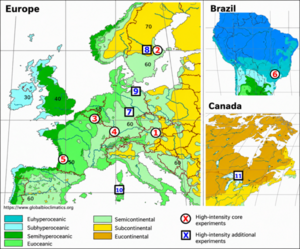
Le projet Biodiversa MixForChange vise à comprendre comment les plantations forestières mélangées peuvent contribuer à l’atténuation et à l’adaptation au changement climatique. En s’appuyant sur le réseau international TreeDivNet, qui regroupe de nombreux dispositifs expérimentaux à travers le monde, le projet analyse comment la diversité des arbres, l’identité des espèces et les pratiques de gestion influencent la séquestration du carbone et la résistance des forêts aux changements climatiques, afin de produire des recommandations pour la gestion des plantations. Dans ce cadre, j’étudie principalement l’effet de la diversité des arbres et de la sécheresse sur la décomposition des litières et la dynamique du carbone dans les sols. Ces travaux visent à mieux comprendre les mécanismes écologiques qui régulent le stockage du carbone et la décomposition dans les écosystèmes forestiers et à identifier les conditions favorisant une plus grande résilience des forêts face aux perturbations climatiques.
•Projet Maia (Region Nouvelle Aquitaine) - MAssification et Intensification Agroécologique des systèmes agri-alimentaires en Nouvelle-Aquitaine
Le projet Région MAIA vise à repenser les systèmes de production agricole afin de répondre aux défis environnementaux en Nouvelle-Aquitaine. Il étudie le potentiel des solutions fondées sur la nature, qui reposent sur la biodiversité et les services écosystémiques, pour réduire l’usage des pesticides, maintenir la fertilité des sols et renforcer la résilience des systèmes agricoles face au changement climatique, tout en générant des bénéfices socio-économiques. Dans ce cadre, je travaille plus spécifiquement sur la fertilité et la multifonctionnalité des sols. Notre approche consiste à combiner des analyses biogéochimiques du fonctionnement des sols avec des outils mathématiques et de modélisation, afin de mieux comprendre les processus impliqués et d’évaluer le rôle des pratiques agricoles, viticoles et de maraîchage à l’échelle de la Nouvelle-Aquitaine dans le maintien des fonctions du sol. L’objectif est d’identifier les pratiques les plus favorables à la préservation de la qualité des sols et des services écosystémiques. Ces travaux contribuent ainsi au développement de systèmes de production plus durables, conciliant performances agronomiques, préservation de la biodiversité et adaptation au changement climatique.
•Projet CARTON (Agence Nationale de la Recherche) - CARbone, Traits fonctionnels associés, et leur OptimisatioN.
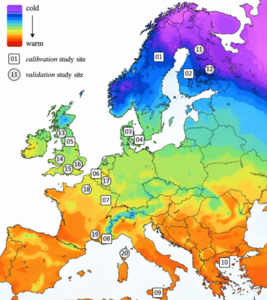
Le projet ANR CARTON vise à mieux comprendre comment les espèces d’arbres influencent le stockage du carbone dans les sols forestiers, un processus clé pour l’atténuation du changement climatique. L’objectif est d’identifier les traits fonctionnels des plantes qui favorisent l’accumulation et la stabilisation du carbone organique du sol, afin de déterminer quelles espèces pourraient à la fois croître rapidement et contribuer au stockage durable du carbone. Dans ce cadre, mon travail consiste à analyser les liens entre les traits des espèces d’arbres et les capacités cataboliques des communautés microbiennes dans des sols allant du nord de la Suède jusqu’au sud de l’Italie. Pour cela, nous combinons des données sur les traits végétaux, les caractéristiques environnementales et les mesures de carbone du sol afin de développer et tester des modèles statistiques permettant d’identifier les traits les plus déterminants pour le fonctionnement microbien du sol et la séquestration du carbone en fonction de l’identité des espèces d’arbres. Ces travaux contribueront à améliorer les prédictions du stockage de carbone dans les écosystèmes forestiers et à guider les stratégies de gestion forestière face au changement climatique.
•Projet DYNAVATAR (EC2CO) - Dynamique des communautés microbiennes sol/phyllosphère au cours de la décomposition de la litière forestière sur substrats biomimétiques
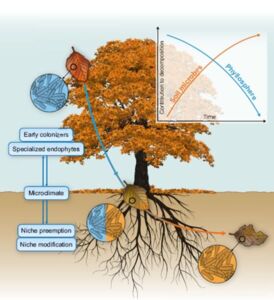
Le projet DYNAVATAR étudie le rôle des communautés microbiennes dans la décomposition des feuilles en forêt, en particulier les interactions entre les microorganismes présents sur les feuilles et ceux du sol. Il s’appuie sur une approche innovante utilisant des substrats biomimétiques artificiels permettant de standardiser les expériences et de contrôler les communautés microbiennes étudiées. Grâce à des analyses chimiques, moléculaires et de modélisation, le projet vise à identifier les fonctions microbiennes impliquées dans la dégradation de la matière organique et à comprendre comment les interactions entre microbiomes influencent la dynamique de décomposition. Il cherche également à déterminer dans quelle mesure la succession des communautés microbiennes conditionnent les processus de recyclage de la matière organique et les flux de carbone dans les écosystèmes forestiers. Les résultats contribueront à améliorer la prédiction du devenir du carbone dans les sols et à mieux comprendre le rôle des microbiomes dans le fonctionnement des écosystèmes (Figure issue de Fanin et al. 2022 – New Phytologist).
Projets Passés
•Projet VR (Swedish Research Council) - Context-dependency of biodiversity effects.
En partenariat avec l’Université d’agriculture Suédoise à Uppsala et Umea et du CSIRO à Glen Osmond en Australie, j’aborde la question de savoir comment le contexte environnemental influence les effets de la biodiversité sur les processus écosystémiques. Pour ce faire nous utilisons un gradient de 30 îles (chacune étant un écosystème indépendant), représentent collectivement une chronoséquence d’îles boréales de plus de 5000 ans. Différentes espèces (myrtille, airelle…) et groupes fonctionnels de plantes (mousse, arbre, buisson…) ont été supprimés pendant plus de 20 ans afin de simuler une perte de biodiversité dans chacune de ces îles. L’objectif est d’identifier les mécanismes par lesquels la diversité des plantes influence la diversité du sol, et en retour, comprendre comment la perte de biodiversité influence la multifonctionnalité dans des écosystèmes contrastés.
•Projet Dipticc (Agence Nationale de la Recherche) - DIversité et Productivité des forêTs impactées par le Changement Climatique
En partenariat avec Bordeaux Science Agro, BIOGECO (Bordeaux), l’EEF (Nancy) et le CEFE (Montpellier), l’objectif de ce projet est d’évaluer si la biodiversité des écosystèmes forestiers permet d’atténuer l’effet des changements climatiques. Pour ce faire, nous utilisons deux dispositifs: le dispositif ORPHEE dans lequel plus de 25000 arbres de 5 espèces locales ont été plantés dans toutes les conditions possibles ; le dispositif BIOPROFOR qui se compose de six sites naturels dans les Alpes dans lesquels les espèces sont étudiées à différents niveau d'élévation. L’objectif principal du projet est de tester si des peuplements plurispécifiques sont plus stables (résistant/résilient) face à la sécheresse que des peuplements monospécifiques. Plus particulièrement, nous étudions le fonctionnement du sol au travers des racines et champignons mycorhiziens et leurs impacts sur la disponibilité des nutriments au sein des écosystèmes forestiers.
•Projet TeaTime4Science - Can drinking tea help us understand climate change?
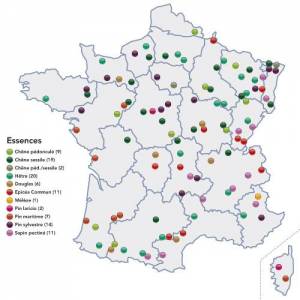
L’objectif de ce projet participatif à grande échelle est d’enterrer des sachets de thé vert et de rooibos, puis de les récupérer trois mois plus tard afin de mesurer leurs taux de décomposition selon un protocole standardisé à l’échelle internationale. En partenariat avec l’Office National des Forêts (ONF) et le réseau RENECOFOR, plus de 1 200 sachets de thé ont été installés dans plus de 100 sites forestiers répartis sur l’ensemble du territoire français, couvrant une grande diversité de contextes climatiques, pédologiques et forestiers. Le recours à un substrat standardisé permet de comparer les vitesses de décomposition entre écosystèmes en limitant l’influence de la qualité de la litière, et ainsi de mieux isoler l’effet des conditions environnementales. Les résultats, associés aux données pédologiques et climatiques des sites, permettront d’identifier les principaux facteurs contrôlant le processus de décomposition. Enfin, ces données alimenteront une base de données mondiale, contribuant à améliorer notre compréhension du rôle du climat dans la dégradation de la matière organique, le cycle du carbone et le fonctionnement des écosystèmes terrestres.
Enseignement et activités scientifiques
Bordeaux Sciences Agro: Science du sol, écologie microbienne.
Université de Bordeaux (Master): Ecologie fonctionnelle, écologie du sol, écologie forestière.
Reviewer > 30 journals, associate editor in Frontiers in Forests & Global Change, section Forest soils.
Publications
[75] Li B., Fu M., Jin G., Song F., Liu Z., Fanin N. (2026). Balancing deterministic and stochastic assembly during needle aging shapes phyllosphere microbial community complexity and stability. Environmental Microbiome. https://doi.org/10.1016/j.fecs.2026.100483
[73] Jensen J., Blondeel H., MacLaren C., Ahmed I. U., Augusto L., Baeten L., Bakker M. R., Bauhus J., Baum C., Beyer F., Brancalion P., Bönisch E., Castro Sánchez-Bermejo P., Dietrich P., Eisenhauer N., Fanin N., Felton A., Ferlian O., Fransson P., Fritsch E., Glynn C., Godbold D. L., Guillemot J., Haider S., Hajek P., Jactel H., Mereu S., Meredieu C., Muys B., Nordh N.-E., Ponette Q., Rewald B., Robin A., Saito D., Sandén H., Scherer-Lorenzen M., Serrano-León H., Steinparzer M., Verheyen K., Werner R., Yi H., Weih M. (2026). Tree species diversity drives above-ground carbon sequestration through light-related trait shifts. Functional Ecology, 20 p., https://dx.doi.org/10.1111/1365-2435.70320, https://hal.inrae.fr/hal-05597760
[72] Liu P., Zhou J., Moorhead D. L., Mallavarapu M., Margenot A. J., Mori T., Wang X., Fanin N., Ochoa-Hueso R., Wang D., Jin Z., Liu J., Liang G., Cui Y., Yang Y., Liu J., Li Y., Chen X., Shi X., Chen J. (2026). Effects of incubation temperatures on soil extracellular enzyme activity across different soil pH conditions. Journal of Plant Ecology, 102. https://dx.doi.org/10.1093/jpe/rtag102/8697816, https://hal.inrae.fr/hal-05653349
[70] Cui H., Chen S., Liu Z., Song H., Chen J., Zhang A., Xiao S., Wang Y., Wang J., Li X., An L., Ding H., Fanin N. (2026). Multifunctionality changes with plant functional groups in Antarctica. Ecology, 107 (2), https://dx.doi.org/10.1002/ecy.70279, https://hal.inrae.fr/hal-05612122
[69] Zhou J., Liu S., van Groenigen K. J., Mueller C. W., Ochoa-Hueso R., Fanin N., Ren Z., Zhang Y., Ma Y., Sun S., Hu J., Zhang Y., Yahdjian L., Wanek W., Olesen J. E., Kuzyakov Y., Liu J., Chen J. (2026). Contrasting responses of particulate and mineral-associated organic carbon stocks to grazing exclusion in an alpine meadow. Agriculture, Ecosystems & Environment 400:110227. https://doi.org/10.1016/j.agee.2026.110227, https://hal.inrae.fr/hal-05612060
[68] Bon L., Fanin N., Bakker M. R., Bertrand I., Trichet P., Augusto L. (2026). Seasonal effects of soil microclimate on microbial activities depend on the understory in two forest ecosystems with contrasting water regimes. Geoderma 465, 117672. https://doi.org/10.1016/j.geoderma.2025.117672, https://hal.inrae.fr/hal-05612083
[67] Du L., Bol R., Tu C., Sun X., Luo R., Liu Q., Luo L., Zhan J., Yin C., Zhu B., Pang X., Fanin N. (2026). Micro‑Faunal and Edaphic Controls on Microbial Carbon Cycling Across Primary and Secondary Successional Trajectories. Global Change Biology 31(12), e70642. https://dx.doi.org/10.1111/gcb.70642, https://hal.inrae.fr/hal-05424178
[66] Bourdin A., Augusto L., Joly F.-X., Bres C., Chahine T., Guillemot J., Hajek P., Jactel H., Jensen J., Mereu S., Muys B., Ponette Q., Sandén H., Parker W. C., Paquette A., Messier C., Robin A., Scherer-Lorenzen M., Serrano-León H., Weih M., Castagneyrol B., Bakker M. R., Fanin N. (2026). Context dependency of tree diversity effects on standardized substrates decomposition: Role of tree functional composition, mycorrhizal type and climatic conditions. Journal of Ecology, 113(12), 3700-3716. https://dx.doi.org/10.1111/1365-2745.70189, https://hal.inrae.fr/hal-05358193
[65] Song Z., Zuo X., Wang H., Wang Z., Zhang X., Hu Y., Hao F., Ma X., Fanin N. (2026). Contrasting impacts of grazing and shrub encroachment on microbial resource limitation in arid grasslands. Agriculture, Ecosystems & Environment, 396:110013. https://dx.doi.org/10.1016/j.agee.2025.110013, https://hal.inrae.fr/hal-05358195
[64] Kempel A., Adamidis G., Anadón J. D., Atkinson J., Auge H., Avtzis D., Bachelot B., Bashirzadeh M., Bota J. L., Classen A., Constantinou I., Crawley M., de Bellis T., Dostal P., Ebeling A., Eisenhauer N., Eldridge D. J., Encina G., Estrada C., Everingham S., Fanin N., Feng Y., Gaspar M., Gooriah L., Graff P., Gusmán Montalván E., Gusmán Montalván P., Hartke T. R., Huang L., Jochum M., Kaljund K., Karmiris I., Koorem K., Korell L., Laine A. L., Le Provost G., Lessard J. P., Liu M., Liu X., Liu Y., Llancabure J., Loïez S., Loydi A., Marrero H., Gockel S., Montoya A., Münzbergová Z., Niu Y., Ott D., Oyarzabal M., Panitsa M., Papatheodorou E., Piper F. I., Püssa K., Rand K., Saiz H., Sanders N. J., Schädler M., Scherber C., Semchenko M., Sepp S. K., Shah M. A., Shaheen I., Stein C., Stewart J., Tang Z., Tschan G., van Nouhuys S., Vandegehuchte M. L., Vernon M., V. R. S., Wang J., Xiao Y., Xystrakis F., Yang J., Yang S., Zografou K., Allan E. (2025). The Bug‐Network (BugNet): A global experimental network testing the effects of invertebrate herbivores and fungal pathogens on plant communities and ecosystem function in open ecosystems. Ecology and Evolution, 15 (10), https://dx.doi.org/10.1002/ece3.72111, https://hal.inrae.fr/hal-05325948
[63] van Galen L., Smith G. R., Margenot A. J., Waldrop M. P., Crowther T. W., Peay K. G., Jackson R. B., Yu K., Abrahão A., Ahmed T. A., Alatalo J. M., Anslan S., Anthony M. A., Araujo A. S. F., Ascher-Jenull J., Bach E. M., Bahram M., Baker C. C. M., Baldrian P., Bardgett R. D., Barrios-Garcia M. N., Bastida F., Beggi F., Benning L. G., Bragazza L., Broadbent A. A. D., Cano-Díaz C., Cates A. M., Cerri C. E. P., Cesarz S., Chen B., Classen A. T., Dahl M. B., Delgado-Baquerizo M., Eisenhauer N., Evgrafova S. Y., Fanin N., Fornasier F., Francisco R., Franco A. L. C., Frey S. D., Fritze H., García C., García-Palacios P., Gómez-Brandón M., Gonzalez-Polo M., Gozalo B., Griffiths R., Guerra C., Hallama M., Hiiesalu I., Hossain M. Z., Hu Y., Insam H., Jassey V. E. J., Jiang L., Kandeler E., Kohout P., Kõljalg U., Krashevska V., Li X., Lu J.-Z., Lu X., Luo S., Lutz S., Mackie-Haas K. A., Maestre F. T., Malmivaara-Lämsä M., Mangelsdorf K., Manjarrez M., Marhan S., Martin A., Mason K. E., Mayor J., McCulley R. L., Moora M., Morais P. V., Muñoz-Rojas M., Murugan R., Nottingham A. T., Ochoa V., Ochoa-Hueso R., Oja J., Olsson P. A., Öpik M., Ostle N., Peltoniemi K., Pennanen T., Pescador D. S., Png G. K., Poll C., Põlme S., Potapov A. M., Priemé A., Pritchard W., Puissant J., Rocha S. M. B., Rosinger C., Ruess L., Sayer E. J., Scheu S., Sinsabaugh R. L., Slaughter L. C., Soudzilovskaia N. A., Sousa J. P., Stanish L., Sugiyama S., Tedersoo L., Trivedi P., Vahter T., Voriskova J., Wagner D., Wang C., Wardle D. A., Whitaker J., Yang Y., Zhong Z., Zhu K., Ziolkowski L. A., Zobel M. & van den Hoogen J. (2025). A global database of soil microbial phospholipid fatty acids and enzyme activities. Scientific Data, 12 (1), 1568, https://dx.doi.org/10.1038/s41597-025-05759-2, https://hal.inrae.fr/hal-05293951
[62] Fanin N., Augusto L., Altinalmazis-Kondylis A., Bon L., Bourdin A., Hättenschwiler S., Martin-Blangy S., Maxwell T. L., Meredieu C., Morin X., Plat N., Toïgo M., Jactel H., Bakker M. R. (2025). Soil secrets and tree tales: An in-depth comparison of carbon storage in mixed and pure stands of pine and birch. Forest Ecology and Management, 592, 122827, https://dx.doi.org/10.1016/j.foreco.2025.122827, https://hal.inrae.fr/hal-05111798
[61] Sarneel J., Atkins J. W., Augusto L., Barel J. M., Duddigan S., Fanin N., Hefting M., Lembrechts J. J., Marín C., McDaniel M. D., Montagnani L., Parkhurst T., Petit Bon M., Sofo A., Keuskamp J. A. (2025). The Assumptions of the Tea Bag Index and Their Implications: A Reply to Mori 2025. Ecology Letters, 28 (4), e70117, https://dx.doi.org/10.1111/ele.70117, https://hal.inrae.fr/hal-05074860
[60] Fanin N., Asplund J., Gundale M., Kardol P., Nilsson M., Wardle D. (2025). Effects of boreal ground layer shrubs and bryophytes on the diversity, biomass and composition of lichen communities across contrasting ecosystems. Oikos, https://dx.doi.org/10.1002/oik.11099, https://hal.inrae.fr/hal-05034669
[59] Chen X., Cao J., Sinsabaugh R., Moorhead D., Bardgett R., Fanin N., Nottingham A., Zheng X., Chen J. (2025). Soil extracellular enzymes as drivers of soil carbon storage under nitrogen addition. Biological Reviews, https://dx.doi.org/10.1111/brv.70021, https://hal.inrae.fr/hal-05034707
[54] Sarneel J., Hefting M., Sandén T., van den Hoogen J., Routh D., Adhikari B., Alatalo J. M., Aleksanyan A., Althuizen I. H. J., Alsafran M. H. S. A., Atkins J. W., Augusto L., Aurela M., Azarov A. V., Barrio I. C., Beier C., Bejarano M. D., Benham S. E., Berg B., Bezler N. V., Björnsdóttir K., Bolinder M. A., Carbognani M., Cazzolla Gatti R., Chelli S., Chistotin M. V., Christiansen C. T., Courtois P., Crowther T. W., Dechoum M. S., Djukic I., Duddigan S., Egerton-Warburton L. M., Fanin N., Fantappiè M., Fares S., Fernandes G. W., Filippova N. V., Fliessbach A., Fuentes D., Godoy R., Grünwald T., Guzmán G., Hawes J. E., He Y., Hero J.-M., Hess L. L., Hogendoorn K., Høye T. T., Jans W. W. P., Jónsdóttir I. S., Keller S., Kepfer-Rojas S., Kuz'menko N. N., Larsen K. S., Laudon H., Lembrechts J. J., Li J., Limousin J.-M., Lukin S. M., Marques R., Marín C., McDaniel M. D., Meek Q., Merzlaya G. E., Michelsen A., Montagnani L., Mueller P., Murugan R., Myers-Smith I. H., Nolte S., Ochoa-Hueso R., Okafor B. N., Okorkov V. V., Onipchenko V. G., Orozco M. C., Parkhurst T., Peres C. A., Petit Bon M., Petraglia A., Pingel M., Rebmann C., Scheffers B. R., Schmidt I., Scholes M. C., Sheffer E., Shevtsova L. K., Smith S. W., Sofo A., Stevenson P. R., Strouhalová B., Sundsdal A., Sühs R. B., Tamene G., Thomas H. J. D., Tolunay D., Tomaselli M., Tresch S., Tucker D. L., Ulyshen M. D., Valdecantos A., Vandvik V., Vanguelova E. I., Verheyen K., Wang X., Yahdjian L., Yumashev X. S., Keuskamp J. A. (2024). Reading tea leaves worldwide: Decoupled drivers of initial litter decomposition mass‐loss rate and stabilization. Ecology Letters, 27 (5), https://dx.doi.org/10.1111/ele.14415, https://hal.inrae.fr/hal-04574740
[53] Khalfallah F., Bon L., El Mazlouzi M., Bakker M. R., Fanin N., Bellanger R., Bernier F., de Schrijver A., Ducatillon C., Fotelli M. N., Gateble G., Gundale M. J., Larsson M., Legout A., Mason W. L., Nordin A., Smolander A., Spyroglou G., Vanguelova E. I., Verheyen K., Vesterdal L., Zeller B., Augusto L., Derrien D., Buée M. (2024). “Ectomycorrhizal exploration type” could be a functional trait explaining the spatial distribution of tree symbiotic fungi as a function of forest humus forms. Mycorrhiza, https://dx.doi.org/10.1007/s00572-024-01146-8, https://hal.inrae.fr/hal-04592027
[50] Ouedraogo F., Cornu J.-Y., Fanin N., Janot N., Sourzac M., Parlanti E., Denaix L. (2024). Changes over time in organic matter dynamics and copper solubility in a vineyard soil after incorporation of cover crop residues: Insights from a batch experiment. Chemosphere, 350, 141137, https://dx.doi.org/10.1016/j.chemosphere.2024.141137, https://hal.inrae.fr/hal-04495783
[49] Zhu M., Fanin N., Wang Q., Xu Z., Liang S., Ye J., Lin F., Yuan Z., Mao Z., Wang X., Hao Z. (2024). High functional breadth of microbial communities decreases home-field advantage of litter decomposition. Soil Biology and Biochemistry, 188, 109232, https://dx.doi.org/10.1016/j.soilbio.2023.109232, https://hal.inrae.fr/hal-04503312
[48] Dommanget F., François A., Chauvat M., Forey E., Erktan A., Fanin N., Chesseron C., Albert A. (2023). Renouées asiatiques envahissantes : la restauration de berges par le génie végétal est-elle si bénéfique à la qualité chimique et à la biodiversité du sol? Sciences Eaux & Territoires, (43), 87-93, https://dx.doi.org/10.20870/Revue-SET.2023.43.7627, https://hal.inrae.fr/hal-04281597,
[45] Bourget M., Fanin N., Fromin N., Hättenschwiler S., Roumet C., Shihan A., Huys R., Sauvadet M., Freschet G. (2023). Plant litter chemistry drives long‐lasting changes in the catabolic capacities of soil microbial communities. Functional Ecology, 37, 2014-2028, https://dx.doi.org/10.1111/1365-2435.14379, https://hal.inrae.fr/hal-04122640
[44] Maxwell T., Augusto L., Tian Y., Wanek W., Fanin N. (2023). Water availability is a stronger driver of soil microbial processing of organic nitrogen than tree species composition. European Journal of Soil Science, 74 (1), https://dx.doi.org/10.1111/ejss.13350, https://hal.inrae.fr/hal-04098843
[43] Bon L., Augusto L., Gaudry J., Bakker M., Lambrot C., Milin S., Trichet P., Fanin N. (2023). Effects of fertilisation and understory removal on aboveground and belowground carbon stocks in wet and dry moorlands in south-western France. European Journal of Forest Research, 142 (4), 723-737, https://dx.doi.org/10.1007/s10342-023-01551-2, https://hal.inrae.fr/hal-04160207
[41] Fanin N., Clemmensen K., Lindahl B., Farrell M., Nilsson M., Gundale M., Kardol P., Wardle D. (2022). Ericoid shrubs shape fungal communities and suppress organic matter decomposition in boreal forests. New Phytologist, 1-14, https://dx.doi.org/10.1111/nph.18353, https://hal.inrae.fr/hal-03745377
[40] Maxwell T., Fanin N., Parker W., Bakker M., Belleau A., Meredieu C., Augusto L., Munson A. (2022). Tree species identity drives nutrient use efficiency in young mixed‐species plantations, at both high and low water availability. Functional Ecology, 36 (8), 2069 - 2083, https://dx.doi.org/10.1111/1365-2435.14109, https://hal.inrae.fr/hal-03745508
[39] Bernard L., Basile-Doelsch I., Derrien D., Fanin N., Fontaine S., Guenet B., Karimi B., Maron P. (2022). Le Priming Effect dans le sol: mécanismes, acteurs et conséquences sur les services écosystémiques dans un contexte de changement global. Étude et Gestion des Sols, 29, 239-274, https://hal.inrae.fr/hal-03685054
[37] Bernard L., Basile-Doelsch I., Derrien D., Fanin N., Fontaine S., Guenet B., Karimi B., Marsden C., Maron P. (2022). Advancing the mechanistic understanding of the priming effect on soil organic matter mineralisation. Functional Ecology, 36 (6), 1355-1377, https://dx.doi.org/10.1111/1365-2435.14038, https://hal.inrae.fr/hal-03639598
[36] Fanin N., Mooshammer M., Sauvadet M., Meng C., Alvarez G., Bernard L., Bertrand I., Blagodatskaya E., Bon L., Fontaine S., Niu S., Lashermes G., Maxwell T. L., Weintraub M. N., Wingate L., Moorhead D., Nottingham A. T. (2022). Soil enzymes in response to climate warming: mechanisms and feedbacks. Functional Ecology, https://dx.doi.org/10.1111/1365-2435.14027, https://hal.inrae.fr/hal-03590923
[35] Maillard F., Jusino M., Andrews E., Moran M., Vaziri G., Banik M., Fanin N., Trettin C., Lindner D., Schilling J. (2022). Wood-decay type and fungal guild dominance across a North American log transplant experiment. Fungal Ecology, 59, 101151, https://dx.doi.org/10.1016/j.funeco.2022.101151, https://hal.inrae.fr/hal-03845610
[32] Fanin N., Maxwell T., Altinalmazis‐Kondylis A., Bon L., Meredieu C., Jactel H., Bakker M., Augusto L. (2022). Effects of mixing tree species and water availability on soil organic carbon stocks are depth dependent in a temperate podzol. European Journal of Soil Science, 73 (1), e13133, https://dx.doi.org/10.1111/ejss.13133, https://hal.inrae.fr/hal-03256070
[31] [31] Lembrechts J., van den Hoogen J., Aalto J., Ashcroft M. B., De Frenne P., Kemppinen J., Kopecký M., Luoto M., Maclean I. M. D., Crowther T. W., Bailey J. J., Haesen S., Klinges D. H., Niittynen P., Scheffers B. R., Van Meerbeek K., Aartsma P., Abdalaze O., Abedi M., Aerts R., Ahmadian N., Ahrends A., Alatalo J. M., Alexander J. M., Allonsius C. N., Altman J., Ammann C., Andres C., Andrews C., Ardö J., Arriga N., Arzac A., Aschero V., Assis R. L., Assmann J. J., Bader M. Y., Bahalkeh K., Barančok P., Barrio I. C., Barros A., Barthel M., Basham E. W., Bauters M., Bazzichetto M., Belelli Marchesini L., Bell M. C., Benavides J. C., Benito Alonso J. L., Berauer B. J., Bjerke J. W., Björk R. G., Björkman M. P., Björnsdóttir K., Blonder B., Boeckx P., Boike J., Bokhorst S., Brum B. N. S., Brůna J., Buchmann N., Buysse P., Camargo J. L., Campoe O. C., Candan O., Canessa R., Cannone N., Carbognani M., Carnicer J., Casanova-Katny A., Cesarz S., Chojnicki B., Choler P., Chown S. L., Cifuentes E. F., Čiliak M., Contador T., Convey P., Cooper E. J., Cremonese E., Curasi S. R., Curtis R., Cutini M., Dahlberg C. J., Daskalova G. N., de Pablo M. A., Della Chiesa S., Dengler J., Deronde B., Descombes P., Di Cecco V., Di Musciano M., Dick J., Dimarco R. D., Dolezal J., Dorrepaal E., Dušek J., Eisenhauer N., Eklundh L., Erickson T. E., Erschbamer B., Eugster W., Ewers R. M., Exton D. A., Fanin N., Fazlioglu F., Feigenwinter I., Fenu G., Ferlian O., Fernández Calzado M. R., Fernández-Pascual E., Finckh M., Finger Higgens R., Forte T. G. W., Freeman E. C., Frei E. R., Fuentes-Lillo E., García R. A., García M. B., Géron C., Gharun M., Ghosn D., Gigauri K., Gobin A., Goded I., Goeckede M., Gottschall F., Goulding K., Govaert S., Graae B. J., Greenwood S., Greiser C., Grelle A., Guénard B., Guglielmin M., Guillemot J., Haase P., Haider S., Halbritter A. H., Hamid M., Hammerle A., Hampe A., Haugum S. V., Hederová L., Heinesch B., Helfter C., Hepenstrick D., Herberich M., Herbst M., Hermanutz L., Hik D. S., Hoffrén R., Homeier J., Hörtnagl L., Høye T. T., Hrbacek F., Hylander K., Iwata H., Jackowicz-Korczynski M. A., Jactel H., Järveoja J., Jastrzębowski S., Jentsch A., Jiménez J. J., Jónsdóttir I. S., Jucker T., Jump A. S., Juszczak R., Kanka R., Kašpar V., Kazakis G., Kelly J., Khuroo A. A., Klemedtsson L., Klisz M., Kljun N., Knohl A., Kobler J., Kollár J., Kotowska M. M., Kovács B., Kreyling J., Lamprecht A., Lang S. I., Larson C., Larson K., Laska K., le Maire G., Leihy R. I., Lens L., Liljebladh B., Lohila A., Lorite J., Loubet B., Lynn J., Macek M., Mackenzie R., Magliulo E., Maier R., Malfasi F., Máliš F., Man M., Manca G., Manco A., Manise T., Manolaki P., Marciniak F., Matula R., Mazzolari A. C., Medinets S., Medinets V., Meeussen C., Merinero S., Mesquita R. C. G., Meusburger K., Meysman F. J. R., Michaletz S. T., Milbau A., Moiseev D., Moiseev P., Mondoni A., Monfries R., Montagnani L., Moriana-Armendariz M., Morra di Cella U., Mörsdorf M., Mosedale J. R., Muffler L., Muñoz-Rojas M., Myers J. A., Myers-Smith I. H., Nagy L., Nardino M., Naujokaitis-Lewis I., Newling E., Nicklas L., Niedrist G., Niessner A., Nilsson M. B., Normand S., Nosetto M. D., Nouvellon Y., Nuñez M. A., Ogaya R., Ogée J., Okello J., Olejnik J., Olesen J. E., Opedal Ø. H., Orsenigo S., Palaj A., Pampuch T., Panov A. V., Pärtel M., Pastor A., Pauchard A., Pauli H., Pavelka M., Pearse W. D., Peichl M., Pellissier L., Penczykowski R. M., Penuelas J., Petit Bon M., Petraglia A., Phartyal S. S., Phoenix G. K., Pio C., Pitacco A., Pitteloud C., Plichta R., Porro F., Portillo-Estrada M., Poulenard J., Poyatos R., Prokushkin A. S., Puchalka R., Pușcaș M., Radujković D., Randall K., Ratier Backes A., Remmele S., Remmers W., Renault D., Risch A. C., Rixen C., Robinson S. A., Robroek B. J. M., Rocha A. V., Rossi C., Rossi G., Roupsard O., Rubtsov A. V., Saccone P., Sagot C., Sallo Bravo J., Santos C. C., Sarneel J. M., Scharnweber T., Schmeddes J., Schmidt M., Scholten T., Schuchardt M., Schwartz N., Scott T., Seeber J., Segalin de Andrade A. C., Seipel T., Semenchuk P., Senior R. A., Serra-Diaz J. M., Sewerniak P., Shekhar A., Sidenko N. V., Siebicke L., Siegwart Collier L., Simpson E., Siqueira D. P., Sitková Z., Six J., Smiljanic M., Smith S. W., Smith-Tripp S., Somers B., Sørensen M. V., Souza J. J. L. L., Souza B. I., Souza Dias A., Spasojevic M. J., Speed J. D. M., Spicher F., Stanisci A., Steinbauer K., Steinbrecher R., Steinwandter M., Stemkovski M., Stephan J. G., Stiegler C., Stoll S., Svátek M., Svoboda M., Tagesson T., Tanentzap A. J., Tanneberger F., Theurillat J.-P., Thomas H. J. D., Thomas A. D., Tielbörger K., Tomaselli M., Treier U. A., Trouillier M., Turtureanu P. D., Tutton R., Tyystjärvi V. A., Ueyama M., Ujházy K., Ujházyová M., Uogintas D., Urban A. V., Urban J., Urbaniak M., Ursu T.-M., Vaccari F. P., Van de Vondel S., van den Brink L., Van Geel M., Vandvik V., Vangansbeke P., Varlagin A., Veen G. F., Veenendaal E., Venn S. E., Verbeeck H., Verbrugggen E., Verheijen F. G. A., Villar L., Vitale L., Vittoz P., Vives-Ingla M., von Oppen J., Walz J., Wang R., Wang Y., Way R. G., Wedegärtner R. E. M., Weigel R., Wild J., Wilkinson M., Wilmking M., Wingate L., Winkler M., Wipf S., Wohlfahrt G., Xenakis G., Yang Y., Yu Z., Yu K., Zellweger F., Zhang J., Zhang Z., Zhao P., Ziemblińska K., Zimmermann R., Zong S., Zyryanov V. I., Nijs I., Lenoir J. (2022). Global maps of soil temperature. Global Change Biology, 28 (9), 3110-3144, https://dx.doi.org/10.1111/gcb.16060, https://hal.inrae.fr/hal-03518443
[30] Altinalmazis-Kondylis A., Muessig K., Meredieu C., Jactel H., Augusto L., Fanin N., Bakker M. (2020). Effect of tree mixtures and water availability on belowground complementarity of fine roots of birch and pine planted on sandy podzol. Plant and Soil, 457, 437-455, https://dx.doi.org/10.1007/s11104-020-04741-8, https://hal.inrae.fr/hal-03093791
[29] Spitzer C., Wardle D., Lindahl B., Sundqvist M., Gundale M., Fanin N., Kardol P. (2021). Root traits and soil micro‐organisms as drivers of plant-soil feedbacks within the sub‐arctic tundra meadow. Journal of Ecology, 1-13, https://dx.doi.org/10.1111/1365-2745.13814, https://hal.inrae.fr/hal-03464328
[28] Lin D., Yang G., Dou P., Qian S., Zhao L., Yang Y., Fanin N. (2020). Microplastics negatively affect soil fauna but stimulate microbial activity: insights from a field-based microplastic addition experiment. Proceedings of the Royal Society B: Biological Sciences, 287 (1934), 1-9, https://dx.doi.org/10.1098/rspb.2020.1268, https://hal.inrae.fr/hal-03173558
[27] Fanin N., Bezaud S., Sarneel J., Cecchini S., Nicolas M., Augusto L. (2020). Relative Importance of Climate, Soil and Plant Functional Traits During the Early Decomposition Stage of Standardized Litter. Ecosystems, 23 (5), 1004-1018, https://dx.doi.org/10.1007/s10021-019-00452-z, https://hal.inrae.fr/hal-04642793
[25] Maxwell T., Augusto L., Bon L., Courbineau A., Altinalmazis-Kondylis A., Milin S., Bakker M., Jactel H., Fanin N. (2020). Effect of a tree mixture and water availability on soil nutrients and extracellular enzyme activities along the soil profile in an experimental forest. Soil Biology and Biochemistry, 148, 1-11, https://dx.doi.org/10.1016/j.soilbio.2020.107864, https://hal.inrae.fr/hal-02947095
[24] Lin D., Dou P., Yang G., Qian S., Wang H., Zhao L., Yang Y., Mi X., Ma K., Fanin N. (2020). Home‐field advantage of litter decomposition differs between leaves and fine roots. New Phytologist, 227 (4), 995-1000, https://dx.doi.org/10.1111/nph.16517, https://hal.inrae.fr/hal-03345983
[23] Graham E. B., Averill C., Bond-Lamberty B., Knelman J. E., Krause S., Peralta A. L., Shade A., Smith A. P., Cheng S. J., Fanin N., Freund C., Garcia P. E., Gibbons S. M., Van Goethem M. W., Ben Guebila M., Kemppinen J., Nowicki R. J., Pausas J. G., Reed S. P., Rocca J., Sengupta A., Sihi D., Simonin M., Słowiński M., Spawn S. A., Sutherland I., Tonkin J. D., Wisnoski N. I., Zipper S. C., Contributor Consortium (2021-03-03). Toward a generalizable framework of disturbance ecology through crowdsourced science. Frontiers in Ecology and Evolution, 9, https://dx.doi.org/10.3389/fevo.2021.588940, https://hal.inrae.fr/hal-03220658
[22] Lin D., Yang S., Dou P., Wang H., Wang F., Qian S., Yang G., Zhao L., Yang Y., Fanin N. (2020). A plant economics spectrum of litter decomposition among coexisting fern species in a sub-tropical forest. Annals of Botany, 125 (1), 1-11, https://dx.doi.org/10.1093/aob/mcz166, https://hal.inrae.fr/hal-02620344
[21] Wardle D., Gundale M., Kardol P., Nilsson M., Fanin N. (2020). Impact of plant functional group and species removals on soil and plant nitrogen and phosphorus across a retrogressive chronosequence. Journal of Ecology, 108 (2), 561-573, https://dx.doi.org/10.1111/1365-2745.13283, https://hal.inrae.fr/hal-02527321
[20] Lin D., Wang F., Fanin N., Pang M., Dou P., Wang H., Qian S., Zhao L., Yang Y., Mi X., Ma K. (2019). Soil fauna promote litter decomposition but do not alter the relationship between leaf economics spectrum and litter decomposability. Soil Biology and Biochemistry, 136, 1-8, https://dx.doi.org/10.1016/j.soilbio.2019.107519, https://hal.inrae.fr/hal-02171446
[17] Fanin N., Kardol P., Farrell M., Kempel A., Ciobanu M., Nilsson M., Gundale M. J., Wardle D. A. (2019). Effects of plant functional group removal on structure and function of soil communities across contrasting ecosystems. Ecology Letters, 22 (7), 1095-1103, https://dx.doi.org/10.1111/ele.13266, https://hal.inrae.fr/hal-02629183
[15] Fanin N., Kardol P., Farrell M., Nilsson M.-C., Gundale M. J., Wardle D. A. (2019). The ratio of Gram-positive to Gram-negative bacterial PLFA markers as an indicator of carbon availability in organic soils. Soil Biology and Biochemistry, 128, 111-114, https://dx.doi.org/10.1016/j.soilbio.2018.10.010, https://hal.inrae.fr/hal-02624611
[13] Fanin N., Gundale M. J., Farrell M., Ciobanu M., Baldock J. A., Nilsson M.-C., Kardol P., Wardle D. A. (2018). Consistent effects of biodiversity loss on multifunctionality across contrasting ecosystems. Nature Ecology & Evolution, 2 (2), 269-278, https://dx.doi.org/10.1038/s41559-017-0415-0, https://hal.inrae.fr/hal-02621923
[11] Schneider A. R., Gommeaux M., Duclercq J., Fanin N., Conreux A., Alahmad A., Lacoux J., Roger D., Spicher F., Ponthieu M., Cancès B., Morvan X., Marin B. (2017). Response of bacterial communities to Pb smelter pollution in contrasting soils. Science of the Total Environment, 605-606, 436-444, https://dx.doi.org/10.1016/j.scitotenv.2017.06.159, https://hal.inrae.fr/hal-01604416
[9] Sauvadet M., Chauvat M., Fanin N., Coulibaly S., Bertrand I. (2016). Comparing the effects of litter quantity and quality on soil biota structure and functioning: Application to a cultivated soil in Northern France. Applied Soil Ecology, 107, 261-271, https://dx.doi.org/10.1016/j.apsoil.2016.06.010, https://hal.inrae.fr/hal-02633738
[5] Fanin N., Hättenschwiler S., Schimann H., Fromin N. (2015). Interactive effects of C, N and P fertilization on soil microbial community structure and function in an Amazonian rain forest. Functional Ecology, 29 (1), 140-150, https://dx.doi.org/10.1111/1365-2435.12329, https://hal.inrae.fr/hal-02127024
[3] Fanin N., Fromin N., Buatois B., Hättenschwiler S. (2013). An experimental test of the hypothesis of non-homeostatic consumer stoichiometry in a plant litter-microbe system. Ecology Letters, 16 (6), 764-772, https://dx.doi.org/10.1111/ele.12108, https://hal.inrae.fr/hal-01604136
[2] Fanin N., Barantal S., Fromin N., Schimann H., Schevin P., Hättenschwiler S. (2012). Distinct microbial limitations in litter and underlying soil revealed by carbon and nutrient fertilization in a tropical rainforest. PLoS ONE, 7 (12), 1-11, https://dx.doi.org/10.1371/journal.pone.0049990, https://hal.inrae.fr/hal-01601804
Ce site utilise des cookies afin de vous proposer des vidéos, des boutons de partage, des remontées de contenus de plateformes sociales et des contenus animés et interactifs.
En savoir plus
A propos des cookies
Qu’est-ce qu’un « cookie » ?
Un "cookie" est une suite d'informations, généralement de petite taille et identifié par un nom, qui peut être transmis à votre navigateur par un site web sur lequel vous vous connectez. Votre navigateur web le conservera pendant une certaine durée, et le renverra au serveur web chaque fois que vous vous y re-connecterez.
Différents types de cookies sont déposés sur les sites :
Cookies strictement nécessaires au bon fonctionnement du site
Cookies déposés par des sites tiers pour améliorer l’interactivité du site, pour collecter des statistiques
Les différents types de cookies déposés sur ce site
Cookies strictement nécessaires au site pour fonctionner
Ces cookies permettent aux services principaux du site de fonctionner de manière optimale. Vous pouvez techniquement les bloquer en utilisant les paramètres de votre navigateur mais votre expérience sur le site risque d’être dégradée.
Par ailleurs, vous avez la possibilité de vous opposer à l’utilisation des traceurs de mesure d’audience strictement nécessaires au fonctionnement et aux opérations d’administration courante du site web dans la fenêtre de gestion des cookies accessible via le lien situé dans le pied de page du site.
Cookies techniques
Nom du cookie
Finalité
Durée de conservation
Cookies de sessions CAS et PHP
Identifiants de connexion, sécurisation de session
Session
Tarteaucitron
Sauvegarde vos choix en matière de consentement des cookies
12 mois
Cookies de mesure d’audience (AT Internet)
Nom du cookie
Finalité
Durée de conservation
atid
Tracer le parcours du visiteur afin d’établir les statistiques de visites.
13 mois
atuserid
Stocker l'ID anonyme du visiteur qui se lance dès la première visite du site
13 mois
atidvisitor
Recenser les numsites (identifiants unique d'un site) vus par le visiteur et stockage des identifiants du visiteur.
13 mois
À propos de l’outil de mesure d’audience AT Internet :
L’outil de mesure d’audience Analytics d’AT Internet est déployé sur ce site afin d’obtenir des informations sur la navigation des visiteurs et d’en améliorer l’usage.
L‘autorité française de protection des données (CNIL) a accordé une exemption au cookie Web Analytics d’AT Internet. Cet outil est ainsi dispensé du recueil du consentement de l’internaute en ce qui concerne le dépôt des cookies analytics. Cependant vous pouvez refuser le dépôt de ces cookies via le panneau de gestion des cookies.
À savoir :
Les données collectées ne sont pas recoupées avec d’autres traitements
Le cookie déposé sert uniquement à la production de statistiques anonymes
Le cookie ne permet pas de suivre la navigation de l’internaute sur d’autres sites.
Cookies tiers destinés à améliorer l’interactivité du site
Ce site s’appuie sur certains services fournis par des tiers qui permettent :
de proposer des contenus interactifs ;
d’améliorer la convivialité et de faciliter le partage de contenu sur les réseaux sociaux ;
de visionner directement sur notre site des vidéos et présentations animées ;
de protéger les entrées des formulaires contre les robots ;
de surveiller les performances du site.
Ces tiers collecteront et utiliseront vos données de navigation pour des finalités qui leur sont propres.
Accepter ou refuser les cookies : comment faire ?
Lorsque vous débutez votre navigation sur un site eZpublish, l’apparition du bandeau « cookies » vous permet d’accepter ou de refuser tous les cookies que nous utilisons. Ce bandeau s’affichera tant que vous n’aurez pas effectué de choix même si vous naviguez sur une autre page du site.
Vous pouvez modifier vos choix à tout moment en cliquant sur le lien « Gestion des cookies ».
Vous pouvez gérer ces cookies au niveau de votre navigateur. Voici les procédures à suivre :
Pour obtenir plus d’informations concernant les cookies que nous utilisons, vous pouvez vous adresser au Déléguée Informatique et Libertés de INRAE par email à cil-dpo@inrae.fr ou par courrier à :
INRAE 24, chemin de Borde Rouge –Auzeville – CS52627 31326 Castanet Tolosan cedex - France